 Thrive Safe
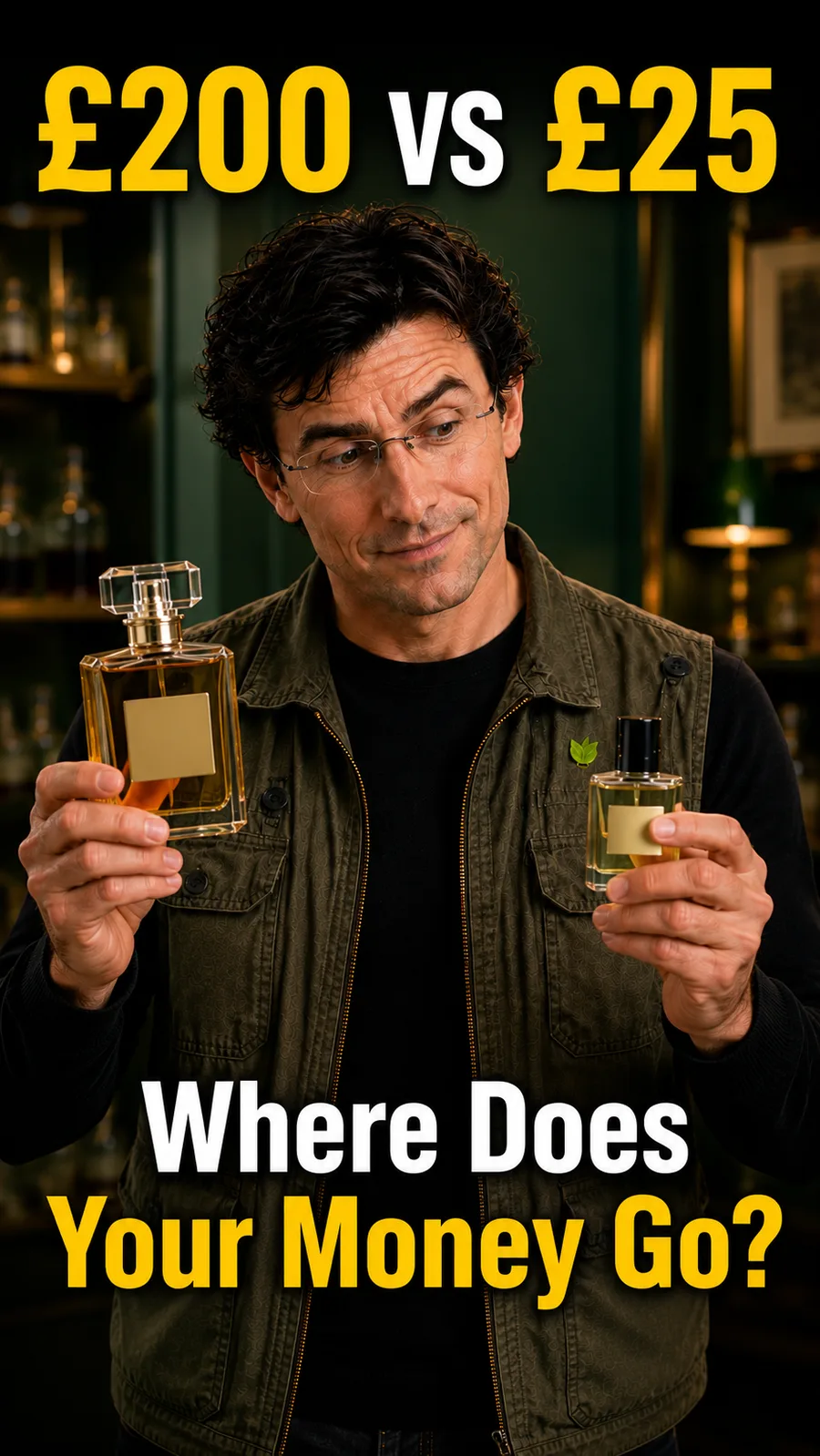
I bought a bottle of perfume recently, and standing at the counter, one question kept nagging at me: why does this one cost £200, while the bottle next to it — similar size, similar strength — costs £25?
So I decided to actually find out. Where does the money go?
The Investigation
A bottle of perfume is really several products stacked on top of each other, and each layer carries its own cost.
Materials
Fragrance is built from a mix of natural extracts — rare flowers, resins, woods — and synthetic aroma molecules. Natural ingredients, a gram of rose absolute or oud oil for instance, can be genuinely expensive to source and extract. But here's something most people don't expect: synthetic ingredients are not the cheaper, inferior option people assume. Many are prized specifically for effects nature can't replicate, and some of the most celebrated modern fragrances lean heavily on synthetics by design.
What you're paying for at the materials level isn't always "more natural." It's complexity, quality of sourcing, and the perfumer's craft in blending them.
Manufacturing
Blending a fragrance well is closer to a craft than a factory line. Perfumers — sometimes called "noses" — spend years training, and a signature scent can take dozens, sometimes hundreds, of trial formulations before it's finished. That expertise is real, and it reflects in the cost of fine fragrance in a way it simply doesn't at the cheaper end of the market.
Packaging
The bottle, the cap, the box, the printing — these aren't incidental. Heavy glass, metal detailing, and considered design all add real cost. For many buyers, the object itself is part of what they're paying for. The ritual of picking up a beautiful bottle, the weight of it, the experience of the box — these are legitimate forms of value, even if they have nothing to do with what's inside.
Research and Development
Developing a new fragrance involves extensive testing: how does it evolve over hours on skin? How does it perform on different skin types? How stable is it over time and in varying temperatures? Safety assessment is also required before any fragrance can reach the market. None of this is instant, and none of it is free.
Business Costs
Before a fragrance reaches a shelf, it travels — warehousing, shipping, import duties, and retailer margins all sit on top of the product cost. A fragrance sold in a high-end department store carries a very different cost structure than one sold online direct-to-consumer, and that difference shows up in the retail price.
Marketing
This is often where luxury fragrance spends most — and it's the number that tends to surprise people. Advertising campaigns, celebrity faces, photography, and social media can represent a significant share of a bottle's price. Industry observers have suggested that for some prestige houses, marketing spend exceeds the cost of the fragrance itself. I won't give you an exact figure, because these aren't numbers brands publish and I won't invent them — but the direction is consistent: at the luxury end, the liquid is rarely the main cost driver.
Brand Value
Heritage, reputation, and exclusivity are real forms of value for many buyers, even though they don't show up in the bottle itself. Wearing a fragrance with a particular name, from a particular house, carries meaning for the person wearing it. That meaning is part of what they're buying. There's nothing wrong with that — it's simply worth understanding that it's part of the price.
What We Know
Public information and industry estimates consistently suggest that fragrance and packaging make up a modest share of a luxury perfume's retail price, with marketing and brand positioning frequently representing a larger portion. Exact figures vary by brand and aren't usually disclosed, so this is the territory of informed estimates rather than hard numbers. What's clear is that the liquid is rarely the main cost driver at the luxury end of the market.
The Bigger Question
So — what matters most to you?
Would you pay extra for the name on the bottle? Does the weight of the glass or the ritual of unboxing change how the scent feels to wear? Is a £30 fragrance capable of smelling just as good to you as a £300 one?
There's no wrong answer here. That's rather the point.
A fragrance you love, that suits you, that you reach for every morning — that's valuable regardless of what it cost. Understanding where the money goes just helps you decide what's actually worth it to you, rather than assuming the price tag is the measure of the thing.
The Thrive Safe Moment
Understanding a product isn't about finding fault with it. It's about understanding value — so you can decide what's actually worth paying for, for you.
Luxury isn't always about what's inside the bottle. Sometimes it's about craftsmanship, design, heritage, exclusivity — or simply how a product makes us feel. Understanding where your money goes helps you decide what matters most to you.
I'm Professor Sage, from Thrive Safe.
And remember — curiosity is healthier than fear.
Want to understand what you are really buying? Try Thrive Safe — free, at thrivesafe.app.